
There was no reaction from the other elves when the illusory glade of flowers and floating stars dissolved away, not immediately, their silence made starker by the wintery clearing to which they had returned.
Almon found his voice first. “Must you dispute everything, child?”
The wizard was livid; his face had flushed dark red, and he threw up his suspended arm in irritation, casting whatever invisible thing had perched on his wrist into the night. He strode across to Saphienne with growing wrath. “Could you not concede me this pageantry? Would it have been so trying for you to hold back, content in the knowledge that you had seen through the spell?” He stopped before her, kicking at the snow. “Or did it not occur to you that I had planned the reveal? Why did you have to ruin things, Saphienne?”
Faylar was still looking around himself in shock. “It was a… dream?”
“A hallucination, you imbecile,” Almon snapped over his shoulder.
Looking at each other, Celaena and Iolas backed away. Everyone knew it was a dangerous thing, to anger a wizard, let alone to interfere with his magic.
Yet, for reasons she couldn’t explain, Saphienne was unafraid. “You’re angry at me, not him.”
“I know that!” His voice had risen to a roar. “Don’t you dare further condescend to me, you wretched child! Not one more remark! I won’t have it.”
Realising that she had provoked him too far, she kept silent, though she didn’t look away from him as he glowered and seethed.
Almon sensed she wasn’t intimidated, and his fiery anger slowly subsided, becoming instead the embers of dull rage. Without turning, he addressed the other children. “Iolas, Celaena, go back to your homes. Faylar, visit me on the morrow.”
Celaena turned pale. “I failed?”
Then Almon pivoted to her, and whatever was in his eyes made the girl start in fright. She recovered herself well enough to bow, and then she all but ran away, followed after by Iolas, whose eyes briefly met Saphienne’s — with clear concern for her wellbeing.
Faylar pressed his luck. “Thank you, Master Almon. I’ll see you tomorrow.” Then he, too, departed.
Alone now, Saphienne and the wizard faced each other.
His voice was low. “How did you see through the spell?”
She folded her hands together. “You got the flowers wrong. They smelled right, they felt right, and they looked convincing. But lavender has different leaves, and grows from a shrub, not as a single flower.”
His brow was furrowed. “That was all?”
Saphienne shook her head. “I also… recognised the colour. The blue. Like the blue you’re wearing.”
The wizard took a deep, steadying breath. “You know the colours of magic?”
“No.” She shrugged lightly. “I’ve seen a fascinator before. Knowing what it does, recognising blue among its colours, seeing the flowers… I didn’t know, but I felt something was wrong. Then you mentioned reality, and it all clicked into place.”
Almon walked away from her, his breath visible in the cold air. His hand went to the bridge of his nose, and then he flinched with his whole body, glaring up at his shoulder and muttering something in a language she didn’t speak. He paced back and forth for the better part of a minute, grumbling all the while.
When he returned, his fury had subsided into familiar annoyance. “Had I reason to suspect you were so observant,” he sighed, “I would have disguised the spell. Red would have been the appropriate colour.”
“Red is the colour of… another type of magic?”
“Another discipline.” His lips were drawn, downturned. “Conjuration. Blue is the colour of Hallucination. But any half-decent wizard can alter the gross appearance of their magic, should he have need to.”
“I didn’t do it to spite you.”
He studied her face. “Why did you?”
“I needed to know what was real.”
Unexpectedly, he smiled. “Had you not taken me by surprise, your hand would have brushed across the flower. My force of belief is usually much stronger, but I hadn’t even considered the possibility that one of you would have cause to doubt my work.”
“Your belief in the hallucination?”
“The discipline of Hallucination hinges on belief. A wizard must know the illusion to be false, and yet believe anyway, in order to sustain the magic.” He looked up at the revealed night sky, contemplating the truer, more distant stars. “So too a wizard must not lose their knowledge that it is false, or the magic will unravel. The art of Hallucination lies in sustaining a waking dream, which requires a fertile imagination, and suspension, but not annihilation, of disbelief.”
Saphienne looked away. “I apologise, for ruining your theatrics.”
“I don’t believe you regret it, Saphienne, but I accept your apology all the same.”
“Why?”
Almon folded his arms. “You’re clearly, irrefutably proud. Offering up your pride when you don’t believe you were wrong, that means more than contrition.”
Too late to make a difference, Saphienne grasped what drove Almon to teach, and thereby what it was he looked for in prospective students. Yet the knowledge only puzzled her. “Why did you choose Faylar?”
“Faylar?” His expression was dismissive. “I simply owe the boy an apology. He is hardly intelligent, but he’s hardly an imbecile. My misdirected anger makes the fact that I’m refusing him all the more awkward.”
Saphienne felt as though the ground beneath her was beginning to shift. “Then, why wasn’t he suitable?”
“You tell me, since you’re so observant.”
She closed her eyes as she reflected on the night. “He kept complimenting you. While he did notice the differently drawn stars in my calligraphy, he dismissed their significance, and went on to argue with Iolas when he said my work was better. He stressed how well prepared he was, but when you asked him to rephrase an answer to your question, he floundered.”
“And so?”
Saphienne met his gaze again. “He was prepared — by someone else. He’s got a good memory for turns of phrase, so he knew the things to say, but they weren’t things he understood, because he struggles to learn, since he’s unobservant, and doesn’t know when to defer to more learned people.”
“You might be accused of that last failing.”
Smiling very brightly, she answered with levity she didn’t feel. “Well, whoever thought that would be wrong, and not worth deferring to — wouldn’t they?”
Almon didn’t return her smile, now keeping his emotions at a distance, but there was a hint of… not quite respect, though a sentiment similar to it showed in his eyes. “What of the others, then?”
Saphienne didn’t know what to make of events. “You sent them home, which suggests you’re done with them, but I had the wrong impression about your intentions toward Faylar. I can’t tell what you plan for them.”
“To examine them further.” He shifted his weight, his expression remaining even. “Both of them show promise for different reasons. Iolas interests me in particular. He clearly doesn’t want to be a wizard, not really, but he feels obliged to become one… and will try, even though he prefers calligraphy.”
The memory of Iolas’ willingness to concede his loss, together with his story about his father, supported what the wizard said. “Is he doing it for someone else?”
“I don’t yet know.” A hint of thoughtfulness crept into Almon’s voice. “The boy has will enough to stand up for himself, so perhaps he seeks my instruction for the sake of many other people, not to please one in particular. He would be happier with his inks and papers, but happiness and power seldom intertwine.”
The author’s narrative has been misappropriated; report any instances of this story on Amazon.
“And Celaena?”
“A by-the-numbers candidate for wizardry.” He permitted himself to smile at his own joke, then discarded his good humour. “I will, in all likelihood, teach her. She seems a little impulsive, and keen to make more of herself than she is… but I can hardly fault her for those tendencies. She might well learn more impressive behaviours from them.”
“Leaving only me.”
“Ah, the girl speaks as though she doesn’t secretly hope.” His tone was mocking despite his flat expression, and he loomed over her. “You still think I’m going to teach you, after all that has happened?”
Saphienne felt more unnerved by that question than she did by the prior threat of his anger. She swallowed. “Haven’t you been teaching me just now?”
“Or am I just throwing salt on the wound?”
“You haven’t made your mind up.” She felt the coin, still in her hand throughout all that had happened. “But you don’t want to, and you haven’t wanted to since before we met.”
“Correct.” His voice became colder than the field. “I dislike you, girl. At first I was being entirely unfair in my dislike, but now I can say for certain you have all the worst qualities that I despise in grown elves. I don’t believe you will grow out of them.”
Still, he was undecided, which Saphienne thought over quickly. “Which implies I have qualities that recommend me despite your dislike.”
“Regrettably so. You have several, rare traits of character held by only the finest wizards. Do you expect me to name them for you? Do you hope for compliments? I will not.”
“But you’ll enumerate my failings as it pleases you,” Saphienne retorted.
“Well, now I won’t. At least, not tonight.” He stepped away, turning his back to her as he gazed up at the stars again. “Perhaps not ever, if we have no further reason to associate. But I must make up my mind, which means I must ask you what I will ask the other two. I will give you this courtesy: consider your answer very carefully, for I will base my decision entirely on what you tell me.”
“I would like to ask a question, first.”
He turned back toward her, a little further than should have been necessary to see over his shoulder. “Ask it. I may answer.”
“You speak as though you might teach all three of us.” She took a deep breath. “How many students do you teach at once?”
“No more than five in any group, though I teach several groups throughout the year, differing by age and degree of practice.” He watched as the realisation lit her face. “Ah, you thought you were all competing for limited places? But you were the one who made it a competition, Saphienne, when you wouldn’t accept my refusal.”
Saphienne blinked. “But you let us compete.”
“As it happens, it made for a very good way to learn more about you all. Ordinarily, I wouldn’t have set you in competition with each other, but you did that yourself, and why disabuse you of your error? Whether or not I will instruct you all in the Great Art, teaching moments must be seized upon when they present themselves.”
Looking at the portly wizard as he studied the night sky, Saphienne felt both shame for her conduct and rising ire toward Almon. Had he not been set against her, she wouldn’t have been so combative, wouldn’t have had to force her way back into the fold. That he exploited the situation under the excuse of teaching made it worse, for really, she felt certain he did it for his own amusement.
Pride: that was what drove him, and what he respected, and why he loved his theatrics, which were his way of keeping himself apart, and so superior. What he wanted was to feel proud of himself, but he accomplished that not through raising others up, but by climbing above them, even forcing them down… where he could justify doing so.
Of course he hated Filaurel. She wouldn’t think well of him at all. And unlike him, she could find her happiness in others. That was how she was with–
“Are you prepared?”
Eyes burning, Saphienne nodded, then spoke aloud. “Ask your question.”
Almon faced her as he asked it. “Saphienne, why do you want to learn the art of magic?”
* * *
Before Gaeleath had arrived to teach Saphienne sculpture, there was a period after finishing shoe making with Ninleyn where she returned to the library, falling into the old routine of practicing her calligraphy and helping with the books. Working alongside Filaurel was pleasant, and even though they had still seen each other most days, Saphienne realised how much she had missed her prolonged company during her other studies.
“Saphienne,” Filaurel asked one evening, when no one else was visiting, “why sculpture? Is it related to your other choices?”
Saphienne had been reading quietly by the fireplace, and she frowned, memorising the page number before closing her book. “No one else has asked.”
“You’re thorough, but you’re not obsessive. I don’t believe your studies are just stepping stones to you.”
Looking up at the librarian, she felt fully visible for the first time since Kylantha had left… the memory of which she pushed down. She looked away, into the fire, very much a moody teenager. “Aren’t they?”
Filaurel sat next to her. “Not if I know you. Do I know you?”
She closed her eyes, focusing on her breathing. “Better than the rest. I’m sorry.” With a shake of her head she met her gaze. “I… you’re going to think I’m pretentious.”
“If it’s important to you, it’s not pretentious.”
Saphienne considered this. “…All right, then. I’m preoccupied by questions of form. What makes an elf an elf? How do you look at someone and decide whether they’re an elf?”
“That explains the sculpture. I don’t follow how it relates to the rest.”
“But that’s the point,” Saphienne insisted, leaning forward. “What distinguishes the form of a thing from how it appears? How someone dresses, the things they wear — aren’t they just as much a part of how we perceive them? Doesn’t that change their appearance, and doesn’t that change their form?”
“Well, some philosophers would say someone’s true form is what is fixed within them. Elves are born elves, and thereby remain elves.”
“Yet, elves change.” She gestured to her own hair. “Brown, blonde, red, white; elves differ across the seasons, and that change is part of us. Our form changes.”
“In fixed ways. Hair changes with the season, but it’s predictable. Our ears stay the same throughout.”
“If I were to have an accident, and lose my ears, would I be less of an elf?”
Filaurel flinched, and her ears twitched, as though Saphienne had struck them. Her lips moved, but no words followed. Then she swallowed, shaking her head. “…That’s a hard question. Usually, if you asked anyone that, they’d tell you no.”
“That’s a lie, though, isn’t it?”
The librarian breathed out slowly. “Ears are important to us. Losing them would be tragic. It would… I suppose, honestly, it would diminish you. That’s how we’d see it. Like you had lost an important part of being an elf. Not that anyone would tell you so.”
Saphienne was slightly surprised that she admitted it. “Then you must accept that what makes someone an elf is not fixed. If it can be diminished, can it also be added to? Does how it’s presented change what it is? Where is the line drawn?”
Now Filaurel was watching Saphienne intently, and her eyes held a glimmer of memory. Whatever she remembered, she did not say, but there was sadness in the way she inclined her head. “I don’t have a good answer. But I would be careful who else you put these questions to. Most around here won’t like to think about them.”
“I know,” Saphienne replied, returning to her book. “I wouldn’t bother asking anyone else. Especially since you’re all wrong.”
“Wrong, how?”
“I’d still be just as much of an elf if I lost my ears.” She spoke with absolute conviction that made her seem younger, and yet also older, than she was. “It’s not ears that make elves what they are. It’s not any individual thing. Or all the many things together.”
Filaurel furrowed her brow. “Then what does?”
“I don’t know. Not yet. But I’ll find out.”
* * *
Almon’s question was simple, spoken quietly, but Saphienne could swear she heard it echoing from the trees around the clearing.
She took her time composing her answer.
“I told you before,” Saphienne said, “that I broke your hallucination because I needed to know what was real. You never pressed me on why that was so important. I think you know why it is; and I think you detest many things you read in me that you also detest in yourself, though you would never admit that. Nor do I want you to.”
The wizard didn’t interrupt, but she felt his attention sharpen.
“What makes something real?” She spoke as though sincerely asking him, even giving him chance to reply, an opportunity he didn’t take. She went on. “The world is governed by the laws of nature, but Celaena was right when she said that magic lies beyond and above all the laws of nature. Does that make magic more real than those laws? Is magic the absolute truth, the ruling against which there’s no further petition?
“I’ve been thinking about these things. About what’s real, and what’s not. About what makes things true or false. I know someone who uses a fascinator every day. It makes her happy, to spend her life hallucinating, and she spends so much of her time that way — is that more real to her than the rest of her life? Did the wizard, or sorcerer, or whoever it was who made the fascinator — did they make her world for her?
“Even in this world,” Saphienne went on, “in this ‘real’ world, how much of it can we know for certain? What if all of life is a hallucination? And who are we, if there’s the chance that might be true? What makes us who we are? We say we’re elves, but what does that even mean, when a wizard can change their form through magic?
“I have so many questions. And I know that studying magic will just provoke more. But I can’t let these things go.” Her jaw tightened. “I won’t. How can I accept the world, accept what’s true or false, what’s right or wrong, when I don’t even understand what the world is? When it seems like… no one does.”
She sighed, feeling tired. “If you refuse me, I’ll find another way. You’ll make it much harder. And I won’t pretend I like you, either, even if you do teach me.” In spite of her tiredness, she held herself tall. “But I will learn until you can’t teach me any more. And you’ll know that I learned because of you, that I learned from you. Or that you proved me unworthy of the Great Art, which perhaps I am. Maybe magic is the only thing that’s real, and the only thing that has any real worth. One way or another, I need to know.”
She lapsed into silence.
Almon gave no indication as to whether he was swayed, only asking, “Are you done?”
Saphienne nodded.
“You do like to hear yourself talk.” He shook his head, started out toward the treeline behind her, but paused as he drew alongside. “Visit me again when you’ve turned fourteen.”
Saphienne stood still as she watched him go.
Then, suddenly able to move again, she called after him. “Does that mean I’m your apprentice?”
“Ask Filaurel what’s next.” He didn’t bother looking back. “She’ll know what to do with you. And give her my regards when you see her.”
And as he passed out of sight, only Saphienne was left in the glade, there to contemplate the stars overhead that – so the poem had said – needed no further explanation.
End of Chapter 8
Source: Webnovel.com, updated by NovelKeep
Chapters
- CHAPTER 136 – Those Who Stay Behind
- CHAPTER 135 – Those Who Go
- CHAPTER 134 – Arise
- CHAPTER 133 – Let Thine Own Self Show True
- CHAPTER 132 – Loving Imperfectly
- CHAPTER 131 – Living Imperfections
- CHAPTER 130 – The Mysterium
- CHAPTER 129 – Monsters in the Woods
- CHAPTER 128 – Such Pitiful Prayers
- CHAPTER 127 – Love as Blinding
- CHAPTER 126 – Tidings
- CHAPTER 125 – Rule of the Gifted
- CHAPTER 124 – Wilful Acceptance
- CHAPTER 123 – Faithful Observance
- CHAPTER 122 – A Sanguine Inheritance
- CHAPTER 121 – Recursion
- CHAPTER 120 – Heroic
- CHAPTER 119 – Not Arcanum, but Arcana
- CHAPTER 118 – Step by Step
- CHAPTER 117 – Moved From Afar
- CHAPTER 116 – Forest Families
- CHAPTER 115 – Shifting Sands
- CHAPTER 114 – Her Inflection
- CHAPTER 113 – Her Wings Unfurled
- Update: Best Ongoing Story on Royal Road
- CHAPTER 112 – To Insist Upon Herself
- Dramatis Personae: Chapters 01–111
- CHAPTER 111 – She Who Fights Too Long Against …
- CHAPTER 110 – Looked, and Behold
- CHAPTER 109 – Binding with Briars
- CHAPTER 108 – Clipped
- CHAPTER 107 – Saphienne or Saphienne
- CHAPTER 106 – Prodigy
- CHAPTER 105 – Prodigal
- CHAPTER 104 – Weird Sisters
- CHAPTER 103 – Illumination
- CHAPTER 102 – The Source of Her
- CHAPTER 101 – Apprentice and Master
- Update: Top Ten, and Best in Drama, Psychological, and Tragedy on Royal Road
- CHAPTER 100 – An Irresistible Force
- CHAPTER 99 – Thieves Don’t Read
- CHAPTER 98 – A Game of Chess
- CHAPTER 97 – In Perfect Silence, Accompanied
- CHAPTER 96 – The Learn’d Magicìan
- CHAPTER 95 – Readers Don’t Steal
- CHAPTER 94 – And Greater Still
- CHAPTER 93 – The Unknown, and the Unfamiliar
- CHAPTER 92 – To Bind, or Loose
- CHAPTER 91 – Ways Ancient and Magical
- CHAPTER 90 – Maiden and Crone
- CHAPTER 89 – Assumptions of Responsibility
- CHAPTER 88 – Deconstructing the Unseen
- CHAPTER 87 – Mobbed
- Temporary Notice: Redrafting in Progress
- CHAPTER 86 – In Visibility
- CHAPTER 85 – Absent Resolutions
- CHAPTER 84 – In Justice
- CHAPTER 83 – Other Songs to be Sung
- CHAPTER 82 – Unaccountably Sick, and Tired
- CHAPTER 81 – Her Necessary Transgression
- CHAPTER 80 – Summer Snow, and Winter Sun
- CHAPTER 79 – Ask Not For Whom …
- CHAPTER 78 – Flock Call
- CHAPTER 77 – Unrequited
- CHAPTER 76 – Oaths of Bone and Wind
- CHAPTER 75 – Peaces
- Dramatis Personae: Chapters 1–74
- INTERLUDE
- CHAPTER 74 – The Crown of Summer
- CHAPTER 73 – Revelations
- CHAPTER 72 – Making Space for the Sunshine
- CHAPTER 71 – Spare the Rod
- CHAPTER 70 – Into the Light
- CHAPTER 69 – Barely Concealed
- CHAPTER 68 – Maturity
- CHAPTER 67 – The Valleys of Youth
- CHAPTER 66 – Low Esteem
- CHAPTER 65 – High Expectations
- CHAPTER 64 – High Demands
- CHAPTER 63 – Golden Days
- CHAPTER 62 – Covered in Full
- CHAPTER 61 – What Immortal Hand or Eye
- CHAPTER 60 – Auguries of Innocence
- CHAPTER 59 – Innocence and Experience
- CHAPTER 58 – Her Reflection
- CHAPTER 57 – She Who Made the Desert Bloom
- CHAPTER 56 – Struck From History
- CHAPTER 55 – What Elves Won’t Speak About
- CHAPTER 54 – The Substance of Change
- CHAPTER 53 – Illusory Progression
- Update: Best Tragedy on Royal Road
- CHAPTER 52 – All Related in Time
- CHAPTER 51 – What Is and Isn’t
- CHAPTER 50 – To Live in Denial
- CHAPTER 49 – Icons of Devotion
- CHAPTER 48 – Here Be Dragons
- CHAPTER 47 – To Take Arms
- CHAPTER 46 – All Ecstasies
- CHAPTER 45 – The Bones of Her World
- CHAPTER 44 – Suspended in Prelude
- CHAPTER 43 – Managed Perceptions
- CHAPTER 42 – Entwined by Blood
- CHAPTER 41 – Entwined by Choice
- CHAPTER 40 – Her Necessary Intervention
- CHAPTER 39 – Portents Unveiled in Black
- CHAPTER 38 – Darkling Rambling
- Dramatis Personae: Chapters 01–37
- CHAPTER 37 – A Field With the Sun in Her Eyes
- CHAPTER 36 – The First Brush of Spring
- CHAPTER 35 – Those Whom the Gods …
- CHAPTER 34 – Where Spirits Fear to Tread
- CHAPTER 33 – Sharp Recollections
- CHAPTER 32 – Lost in Translation
- CHAPTER 31 – Enchantment by Acquaintance
- CHAPTER 30 – Defining Boundaries
- CHAPTER 29 – The Outline of Barriers
- CHAPTER 28 – Show and Tell
- CHAPTER 27 – The Presence in Absence
- CHAPTER 26 – Mirrors
- CHAPTER 25 – Prisms
- CHAPTER 24 – What Connects
- CHAPTER 23 – What Distinguishes
- CHAPTER 22 – Innocence
- CHAPTER 21 – All the Ease of Summertime
- CHAPTER 20 – For Reason and Passion
- CHAPTER 19 – Just Friends
- CHAPTER 18 – Moving Ahead, Falling Behind
- CHAPTER 17 – Look, and Look Again
- CHAPTER 16 – Of Magic Made Tangible
- CHAPTER 15 – Intangible Lessons
- CHAPTER 14 – An Immovable Rock
- CHAPTER 13 – Small Things That Matter
- CHAPTER 12 – Taking Care of Her
- CHAPTER 11 – Misapprehensions
- CHAPTER 10 – Around the Issue
- CHAPTER 9 - Emerging Shapes
- CHAPTER 8 – A Frozen Summit
- CHAPTER 7 – Seeing and Believing
- CHAPTER 6 – The Great Art
- CHAPTER 5 - A Bloody Contest
- CHAPTER 4 - Choosing a Side
- CHAPTER 3 - Only a Book's Throw Away
- CHAPTER 2 - The World on Its Edge
- PRELUDE AND CHAPTER 1 – The Frog and the Toad
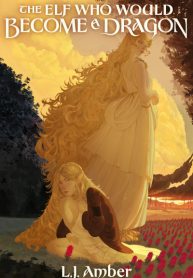
- The Elf Who Would Become A Dragon — Full Cover