
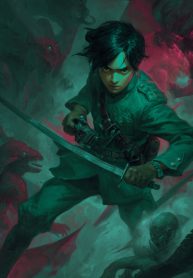
Chapter 198: Chapter 198— Silas’ Perspective
In Ashmar, Silas felt the weight of Ashmar’s singular focus pressing down on him like atmospheric pressure at ocean depth.
Everything here was about combat.
The academy’s architecture reflected it—no art galleries, no libraries worth the name, no recreational spaces. Just training halls. Sparring rings. Armories. Meditation chambers designed specifically for combat-focused soul force refinement.
Even the dining hall felt militant. Students ate in assigned blocks by year and specialization. Conversations centered on technique, tactics, recent Shroud deployments. Nobody discussed philosophy or history beyond what was tactically relevant.
It was a stark contrast to the Republic.
Sparkshire had breadth. Arts. History. Political theory. Combat was central, obviously—survival demanded it—but students were expected to be more than just weapons. The Republic wanted soldiers who could think strategically, navigate politics, understand the broader context of their actions.
Ashmar wanted fighters.
Pure. Focused and uncomplicated.
Like being trained by a brute seasoned veteran versus a clinical technique-inspired instructor. Both approaches produced capable combatants, but the philosophy underneath was fundamentally different.
Silas could appreciate the efficiency. No wasted motion. No resources devoted to “unnecessary” education. Just relentless cultivation of martial capability.
But it also felt suffocating.
For the entire time he’d been in Ashmar— weeks now—he’d felt like he was sitting on pin pricks. Being stirred in a boiling pot as the temperature gradually increased. Constant low-level tension that never quite resolved into open conflict but never fully dissipated either.
The Ashmar students resented the Republic’s presence. That was obvious from day one. They viewed the exchange program as political theater—their government forcing them to host representatives from a nation they considered arrogant and overvalued.
The Republic students felt the hostility. Responded with either defensive aggression or careful neutrality.
And Silas… observed.
Because something was wrong.
There hadn’t been any directive from Republic authorities. Not for him, not for any of the other Sparkshire students deployed here. They’d been told to “participate in the exchange program” with no specific objectives, no reporting requirements, no strategic guidance.
Just participate.
A blind man could smell shit even if he couldn’t see it.
Silas wasn’t blind.
During the first week in Ashmar, he’d tried prying information from his fellow Republic students. Subtle questions. Casual conversation. Testing whether anyone had received instructions he hadn’t.
It hadn’t gone well.
He wasn’t the welcoming type. Never had been. Eye candy for certain demographics—he’d noticed the appreciative looks from some Ashmar students who found the “dangerous loner” aesthetic attractive—but disturbingly awkward for others who couldn’t parse whether he was genuinely antisocial or just performing aloofness.
The other Republic students had been defensive when he’d probed. Suspicious of his motives. Unwilling to share whatever private directives they might have received.
Or, more likely, they genuinely hadn’t received any directives either.
From what Silas had inferred through observation and careful listening, most of the students sent to Ashmar weren’t politically connected. No major noble house backing. No military families with influence in the Senate.
They were expendable pieces. Sacrificial pawns deployed to satisfy diplomatic requirements without risking anyone the Republic actually valued.
That realization had settled into Silas’s consciousness like cold certainty.
They’d been abandoned to whatever Ashmar chose to do with them.
Not maliciously. Just pragmatically. The Senate had prioritized protecting valuable assets—students from major houses, promising candidates with potential, anyone whose loss would create political complications.
And sent everyone else to Ashmar.
Silas found he wasn’t particularly bothered by it.
He’d never expected institutional support. Had learned at Vester that organizations used people as resources and discarded them when convenient. This was just another iteration of that reality.
The question was what to do about it.
—–
Arjun Hagar wasn’t interested in political subtlety.
Silas had recognized that within days of arrival. The House Hagar first-year was a pure combat specialist. Obsessed with his sword the way some people were obsessed with religion or romance.
Training from dawn until his muscles gave out. Then meditation to refine soul force. Then more training once he’d recovered enough to stand.
It was maniacal. Impressive. Limiting.
Close-mindedness, Silas had learned, was the easiest trait to exploit. People who narrowed their focus to a single priority became predictable. Their decision-making followed obvious patterns. Their vulnerabilities were structural rather than situational.
Personal power was important—obviously. Silas would never dispute that. But it wasn’t the only facet of power that mattered.
Presence. Connection. Money. Information. Social capital.
These were force multipliers. They amplified base personal capability in ways that raw combat strength couldn’t replicate.
Arjun understood none of this.
He only understood the sword.
Which meant he was simultaneously dangerous and manageable. Dangerous because his combat capability was legitimate—Silas had watched him spar, had seen the technical precision and physical power that marked someone on the path to Elite rank. Manageable because his motivations were transparent.
Take his minor noble family on a path to glory through martial achievement.
Everything else was secondary.
Silas could work with that.
—–
They’d had their first real conversation three weeks into the deployment.
Silas had been observing an Ashmar advanced combat class—open attendance, part of the cultural exchange expectations—when Arjun had approached him after the session concluded.
“You’re Drey right. The spooky assassin from Sparkshire.”
“That’s what my classification says.” Silas kept his tone neutral.
“You know I just can’t read you.” Arjun said it bluntly, without social preamble. “Some people broadcast their capability actively but in your case it’s just like a sheathed blade. I really can’t pin it but my instinct says you’re dangerous.”
“Your instinct would be correct.”
“I want to test my blade against you.”
Silas studied him. There was no hostility in the abrupt request. Just a genuine martial curiosity. The kind of person who measured worth through combat because combat was the only language he fully understood.
“Why?”
“Because I need to know where I stand. It’s as simple as that.”
Honest and direct.
Silas appreciated it in the same way he appreciated well-maintained weapons. Functional simplicity had value.
“You’d probably win,” Silas said. “In direct combat. You’re stronger, faster, better trained in conventional techniques. Your cores are optimized for sustained engagement.”
Arjun’s expression shifted to something between satisfaction and disappointment. “Then why does my sword instinct tell me you’re more dangerous than your capabilities suggest?”
“Because direct combat isn’t the only kind of danger.” Silas gestured vaguely to the surrounding academy. “You could beat me in a sanctioned duel. But if I wanted you dead without anyone knowing who killed you, you’d be dead within a week. That’s the difference between our specializations.”
It was more honest than Silas usually allowed himself to be.
But something about Arjun’s straightforward nature made pretense feel unnecessary.
The House Hagar student considered this for a long moment. “That’s… unsettling.”
“Most people find infiltration specialists unsettling.”
“But you’re telling me this. Warning me.”
“Because you’re not my enemy. You’re just someone trying to advance through the path you understand best.” Silas allowed a slight smile. “And because honestly, it’s refreshing to talk to someone who isn’t playing three layers of political games with every conversation.”
“I don’t understand political games.” Arjun said it without shame. “My family thinks it’s a weakness. They’re probably right.”
“It is a weakness,” Silas agreed. “But it’s also a kind of strength. You can’t be manipulated through political leverage because you genuinely don’t care about it. That makes you predictable, but it also makes you reliable. People know what you want and what you’ll do to get it.”
“Is that a compliment?”
“It’s an observation.”
They’d talked for another hour after that. Not quite friendship—Silas didn’t do friendship in any conventional sense. But something like mutual professional respect.
Arjun had started seeking him out after training sessions. Brief conversations. Sometimes about combat theory. Sometimes about the political dynamics Arjun didn’t understand but was slowly becoming aware of.
“The exchange program isn’t really about education, is it?” Arjun had asked last week.
“No.”
“It’s intelligence gathering. Political maneuvering. Testing how our nations interact under controlled conditions.”
“Yes.”
“That’s…” Arjun had struggled to articulate his frustration. “Wasteful. We could be training instead of playing diplomatic games.”
“Welcome to institutional politics,” Silas had said dryly. “Where the actual objectives are never the stated objectives, and competent soldiers get used as chess pieces by people who’ve never held a weapon.”
Arjun had been quiet for a moment. “You sound angry.”
“I’m pragmatic. Anger requires emotional investment I don’t maintain.”
“That sounds lonely.”
It was.
But Silas didn’t say that.
—–
Weeks into the deployment, Silas had a reasonably clear picture of Ashmar’s internal dynamics.
A rigid hierarchy. Combat capability as primary currency. Intense nationalist pride that bordered on xenophobia. Genuine belief that Ashmar’s aggressive Shroud tactics were morally superior to the Republic’s defensive doctrine.
And underneath it all, insecurity.
They resented the Republic because the Republic was larger, wealthier, more politically influential. Ashmar’s military pride was compensation for feeling diminished in every other metric.
That insecurity could be exploited.
Not by him directly—he was just one expendable first-year with no institutional backing. But information about that vulnerability was valuable. Could be sold. Could be leveraged.
Silas had been documenting observations. Not formal intelligence reports—he had no handler, no official channel for reporting. Just personal notes. Analysis of power structures. Potential leverage points. The kind of information that would be valuable to someone, even if he didn’t know who yet.
He’d also been watching the other Republic students.
Marcus Vale was struggling. The constant hostility was wearing him down. He’d gotten into two fights with Ashmar students—both technically sanctioned sparring that had escalated beyond what instructors considered acceptable. He was on thin ice with Crownspire’s administration.
Some were adapting better. Keeping their heads down. Training hard. Not making waves. A competent survival strategy.
The others fell somewhere in between.
And Silas…
Silas was doing what he did best. Observing. Adapting. Surviving through awareness rather than strength.
His Sense Fade core helped. Ashmar students had trouble interacting with him.
Arjun was the only person who seemed immune to the effect. Maybe because his sword instinct operated on a level deeper than conscious memory. Maybe because his single-minded focus on combat made him less susceptible to subtle mental manipulation.
Either way, their conversations had become Silas’s primary source of human interaction beyond tactical necessity.
That probably said something unfortunate about his social integration.
But functionality mattered more than comfort.
—–
The boiling pot continued heating.
Small incidents. Accumulated friction.
An Ashmar third-year “accidentally” injuring a Republic student during sparring.
A Republic second-year making disparaging comments about Ashmar training methods.
Equipment damage. Scheduling conflicts. The steady erosion of whatever diplomatic goodwill the program had started with.
Silas watched it all and made notes.
Someone was going to die before this exchange program concluded.
It wasn’t a speculation just an Observation.
The temperature was rising too fast. The hostility too persistent. The institutional controls too weak.
Eventually, someone would cross a line that couldn’t be uncrossed.
And when that happened, the political consequences would be…
Interesting.
Silas found he was almost looking forward to it.
Not because he wanted violence. Just because chaos created opportunities.
And he’d always been good at capitalizing on opportunities.
Source: Webnovel.com, updated by NovelKeep
Chapters
- Chapter 242 - 242—Moving Crawlers
- Chapter 241 - 241—Adam's Morning
- Chapter 240 - 240—The Adept's Accounting
- Chapter 239 - 239— Crownhold’s Back
- Chapter 238 - 238—Differentials
- Chapter 237 - 237– The Path Between Nations II
- Chapter 236 - 236—The Path Between Nations
- Chapter 235 - 235— Dawn has Arrived
- Chapter 234 - 234—The Training Window
- Chapter 233 - 233— The Company of The Unprepared II
- Chapter 232 - 232—The Company of the Unprepared
- Chapter 231 - 231— The Architecture Of War II
- Chapter 230 - 230—The Arithmetic of War
- Chapter 229 - 229—The Architecture Of Inevitability II
- Chapter 228 - 228—The Architecture of Inevitability
- Chapter 227— Glimpse of Trauma
- Chapter 226—Strings
- Chapter 225— Receeding For Now
- Chapter 224—Nuclear
- Chapter 223— A Boring Discussion Between Monsters II
- Chapter 222— A Boring Discussion Between Monsters
- Chapter 221— The Black Author
- Chapter 220— The Picture Perfect ending?
- Chapter 219— Cascading
- Chapter 218—The Verdict
- Chapter 217— Race Against Time
- Chapter 216— Cracks in The Foundation
- Chapter 215— Powder Keg
- Chapter 214— Introspection
- Chapter 213— Celestine’ Timely Intervention
- Chapter 212— Feeling Lost
- Chapter 211— Blackmail
- Chapter 210—Seeking Help
- Chapter 209— Gathering Intelligence
- Chapter 208— Blame
- Chapter 207—First Mission
- Chapter 206— Pursuance of Individuality
- Chapter 205— Bane of Blood
- Chapter 204—Mara’s Breakthrough
- Chapter 203—Weird Merchant
- Chapter 202—Faction In The Works
- Chapter 201— A New Perspective
- Chapter 200— Johnmark VS Bright II
- Chapter 199— Johnmark VS Bright I
- Chapter 198— Silas’ Perspective
- Chapter 197—Everybody’s In On It
- Chapter 196—Testing The Spies
- Chapter 195— Baby Steps on Espionage
- Chapter 194— Soul Signatures
- Chapter 193— Thoughts on Structure
- Chapter 192— Back at It Again
- Chapter 191— End of the Narrator
- Chapter 190— Help Rendered In The Past
- Chapter 189— Culture Shocks
- Chapter 188— Crownspire
- Chapter 187— Happenings
- Chapter 186— Adam’s weird Side Project
- Chapter 185— Set In Motion
- Chapter 184— Acknowledging Power
- Chapter 183— The Compromised
- Chapter 182— Tether Drain
- Chapter 181— The Narrator
- Chapter 180— Merchant Calculations II
- Chapter 179—Merchant Calculation
- Chapter 178— Faculty Meeting
- Chapter 177—Political Currents
- Chapter 176— Forging Identity III
- Chapter 175— Forging Identity II
- Chapter 174: Forging Identity
- Chapter 173— External Pressure
- Chapter 172—Recovery and Recognition
- Chapter 171—Advancement and Consequences
- Chapter 170—Extraction and Advancement
- Chapter 169—Impulse and Execution
- Chapter 168— First Blood and Final Breath
- Chapter 167— Raw Combat and Harsh Lessons
- Chapter 166— Self evaluation
- Chapter 165— External Machinations and Internal Secrets
- Chapter 164—Self Interest
- Chapter 163— Bessia’s Stand
- Chapter 162: Trials of Fire
- Chapter 161— The portal
- Chapter 160— Bitter Preparation
- Chapter 159—The Art of Creation
- Chapter 158—Coalition in the South
- Chapter 157—Ominous preparations II
- Chapter 156—Ominous Preparations
- Chapter 155—The Widening Gap
- Chapter 154— Connections and Gaps
- Chapter 153—Opportunism and Cruelty
- Chapter 152— Power’s True Structure
- Chapter 151— Calculated Transformations II
- Chapter 150—Calculated Transformations
- Chapter 149— Discoveries and Dilemmas
- Chapter 148- Little Problem
- Chapter 147—Economics of Survival
- Chapter 146— Classes
- Chapter 145— First Lessons in Violence
- Chapter 144—Truth Beyond Propaganda
- Chapter 143— Victory and Defeat II
- Chapter 142—Victory and Defeat
- Chapter 141— Delusion
- Chapter 140: Combat Assessment - First Blood
- Chapter 139— First examination III
- Chapter 138—First examinations II
- Chapter 137— First Examinations
- Chapter 136— Arrival at Sparkshire
- Chapter 135— New -
- Chapter 134—Final Gathering
- Chapter 133—Cores and Farewells
- Chapter 132— Goodbyes
- Chapter 131—Counting the Cost
- Chapter 130—The Underwhelming Battle
- Chapter 129—Brutal Efficiency
- Chapter 128— Saved By The Engine
- Chapter 127— The Engine’s Arrival
- Chapter 126—Elsewhere
- Chapter 125—The Royal Beneath
- Chapter 124— Lethal Geometry IV
- Chapter 123— Lethal Geometry III
- Chapter 122—Lethal Geometry II
- Chapter 121— Lethal Geometry
- Chapter 120— The Silence and The Siege
- Chapter 119—Choices in the North
- Chapter 118— The Engine
- Chapter 117— Signals
- Chapter 116— Adept Distress
- Chapter 115—Noble Rhys
- Chapter 114—Everyone’s come for a checkup
- Chapter 113—Convergence of Power
- Chapter 112: Vacancy Creation
- Chapter 111: The Opportunist’s March
- Chapter 110— Three-way Casualties
- Chapter 109— Collision
- Chapter 108: Death of a Nobody
- Chapter 107—Third party
- Chapter 106— Clear Light’s Eve
- Chapter 105— Players Position
- Chapter 104— The Night Before
- Chapter 103— Ascension and Infestation
- Chapter 102—Delays and Decisions
- Chapter 101— Celebrations R18*
- Chapter 100: The Fifteen R18*
- Chapter 99—Schemes
- Chapter 98—- Thoughts and Reckonings
- Chapter 97—Adam’s Calculations
- Chapter 96—Stumbling Forward
- Chapter 95—Empathy
- Chapter 94—Cold Calculations
- Chapter 93—The Weight of Stones II
- Chapter 92—-The Weight of Stones
- Chapter 91—A bad Way to Grief R18*
- Chapter 90—Sad News
- Chapter 89—Conversations in Vester
- Chapter 88—Ellarine POV
- Chapter 87—Aftermath
- Chapter 86— End of Battle
- Chapter 85—First blood
- Chapter 84—Pencil Pushers
- Chapter 83—Eve Before Showdown
- Chapter 82—I spoke with Vaelith?
- Chapter 81—Weight of Power
- Chapter 80— Waves Recede
- Chapter 79—who’s really untop?
- Chapter 78—Taking risks
- Chapter 77—Shadows
- Chapter 76—Weapon secured
- Chapter 75—First Battle
- Chapter 74—Reflection
- Chapter 73 — Colony
- Chapter 72 – In The Caves
- Chapter 71 – Sunshine
- Chapter 70 — Squad Selection
- Chapter 69 — The Price Of Entry R18
- Chapter 68—Return Of The Prodigal Shadow
- Chapter 67 — The Eastern March
- Chapter 66 — The Cost of Making It
- Chapter 65 — Ash Between Footsteps
- Chapter 64 — Vester’s Shadowed Walls
- Chapter 63 — All Roads Led to vester
- Chapter 62 — Asset Retrieval
- Chapter 61 — The Monarch Of Bone
- Chapter 60 — The Long Shadow Of The Adept
- Chapter 59 — Breaking Points
- Chapter 58 – The Mixed Wave
- Chapter 57 — Hollow lines
- Chapter 56 — The Fire, The Stone, and the Shadow Between
- Chapter 55 – The Ones Who Remain
- Chapter 54 — “The Slow Goodbye”
- Chapter 53 — The High Command Convenes
- Chapter 52 — Atheon’s Fury
- Chapter 51 — The Folded Path of the Initiate
- Chapter 50 — The Weight of What Remains
- Chapter 49 — The Shadow That Moves
- Chapter 48 — The Quiet After the Storm
- Chapter 47 — What Remains in the Dark
- Chapter 46—Bright vs Larkin II
- Chapter 45 — Bright vs Larkin I
- Chapter 44 — The Others
- Chapter 43 — The People Behind the Walls
- Chapter 42 — The Fall of the Silo
- Chapter 41 — The Night Grim Hollow Trembled
- Chapter 40 — The Hidden Network
- Chapter 39 — Lockdown At Dawn
- Chapter 38 — Threads In The Dark
- Chapter 37 — Shadows In The Cracks
- Chapter 36 — First Drills
- Chapter 35 — The Fledgling Squad
- Chapter 34 — New Burden
- Chapter 33 — The Fracturing Within
- Chapter 32 — The Month of Breaking
- Chapter 31 — Sparks of Discipline
- Chapter 30 — The Quiet Between Battles
- Chapter 29 — Debrief and Division
- Chapter 28 — Echoes Beyond the Fog
- Chapter 27 — The Heart of the Shroud
- Chapter 26 — Fractures in the Fog
- Chapter 25 — The Echoing Hunger
- Chapter 24 — Hunger of Men, Hunger of Monsters
- Chapter 23—The Line We Cross
- Chapter 22 — Overrun
- Chapter 21 —The Heart That Watches
- Chapter 20 – Gathering Storm
- Chapter 19 – The Pulse Beneath
- Chapter 18: The Maw’s Heartbeat
- Chapter 17: The Sound in the Fog
- Chapter 16 – Poisoned Strength
- Chapter 15 – The Whispering Hunt
- Chapter 14 – Blood and Bone
- Chapter 13 – The Pulse of Instinct
- Chapter 12 – Nightfall in the Maw
- Chapter 11 — Shattered Company
- Chapter 10 — Splinters in the Dark
- Chapter 9 — The Crawlers’ Greeting
- Chapter 8 — The Next March
- Chapter 7 — What Stays Hidden
- Chapter 6 — Outpost Grimhollow
- Chapter 5 — The Blooded
- Chapter 4 — Blood in the Fog
- Chapter 3 – The March into Blindness
- Chapter 2 – The Ones Who Still Talk
- Chapter 1 – The Fodder Line