
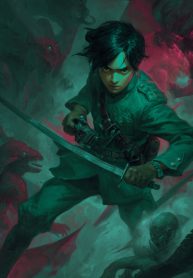
There was a theory, old enough that nobody remembered who had first articulated it, that wars were the most efficient method humanity had ever developed for producing exceptional people.
The logic was not comfortable but it was sound. Peace produced competence — the steady accumulation of skill in controlled environments, the gradual refinement of ability against predictable resistance, the kind of growth that was real and measurable and would never be enough when the situation stopped being controlled. War produced something different. War produced the specific quality of a person who had been put in a situation that exceeded their preparation and had survived it anyway, and the surviving had changed them at a level that no amount of controlled training could reach. The heroes that emerged from wars were not the heroes that had gone into them. They were made by the process. The process was terrible. The product was, in the accounting of power and capability, exceptional.
The Republic understood this.
Not cynically — or not only cynically. The mobilization had genuine strategic logic, the careful deployment of force toward the Federation conflict, the measured escalation that the Senate had authorized and the military had been building toward. But underneath the strategy, visible to anyone who had spent enough time studying how the Republic’s military thought, was the secondary calculation: this war would produce the next generation of serious fighters, and the Republic needed serious fighters, and the most reliable method of production was necessity.
The meat grinder, some called it. The ones who had been through previous conflicts and had come out the other side. Most of the people currently being processed into the draft did not yet have a name for it. Most of the people currently being processed into the draft were afraid.
The smell of vomit in the hastily formed assembly grounds was, Bright reflected, the most honest thing present.
—–
The structure had been explained to them by a man whose name Bright learned was Instructor-Commander Fell, which was either his actual name or a name the military had assigned him for reasons of operational convenience and which fit either way.
Fell was a common man. This was unusual in the context of a Republic military officer corps that was, at every level above the rank and file, heavily inflected with noble house representation. He had no house sigil on his uniform. He had no sigil at all, which in the semiotics of Republic military dress communicated either that he was rank and file or that he was something that didn’t use the sigil system, and the way he moved through the assembly grounds communicated clearly that he was not rank and file.
He was calm. He had the particular quality of a man who had done whatever the military had asked of him for long enough that the asking and the doing had merged into a single continuous motion.
He explained the structure without decoration.
Squads: six to eight people, a squad leader responsible for the unit’s cohesion and tactical execution. Platoons: five to seven squads, thirty to fifty people, a platoon leader responsible for coordinating the squads toward a shared objective. The makeshift company: all the student-initiate platoons together, a company commander responsible for the company’s operational role within whatever larger formation it was assigned to.
“You are not the real army,” Fell said. He said it with the flatness of a fact rather than the edge of an insult. “The real army is composed of people who have been doing this for years. You will be operating adjacent to the real army, in roles that your specific capabilities make you suited for and that the real army’s current deployment posture cannot fill. You will be receiving orders. You will execute those orders. Questions about the strategic logic of those orders are not a productive use of anyone’s time in the field.”
He looked around the assembly grounds. At the nobles in their house-quality gear, at the outpost kids in their functional-but-worn equipment, at the handful of people who were neither and were trying to find the expression that would make them look like they belonged.
“Some of you have been in Shroud deployments,” he said. “Some of you have been in the field. Some of you have not. I am not going to tell you that what’s coming is the same as either of those things, because it isn’t, and you’ll figure that out faster if you don’t have to spend time unlearning what I told you.” He paused. “What I will tell you is that the difference between the people who survive and the people who don’t is usually not power level. It’s usually whether they can keep thinking when everything around them has stopped making sense. Work on that.”
He assigned the platoon leaders from a list that he read without apparent emphasis. Bright’s name was on it. He had expected this, since the processing notation, but hearing it in a formation of forty students produced a quality of attention from the people around him — the rapid recalibration of social positioning that happened whenever a formal hierarchy was established among people who had been informally positioning themselves since they arrived.
He noted who recalibrated visibly and who didn’t. The ones who didn’t were either already comfortable with the assignment or were skilled enough at concealing their reactions. Both categories were useful information.
He noted, further back in the formation, Theodore Selaris.
—–
The thing about Theodore was that he was going to be here regardless.
Bright had thought about this in the days since the draft missive.Theodore alive and hale and present was a given — Bright had never seriously entertained the possibility that the breach or the tribunal’s collapse or the general chaos of the preceding weeks had meaningfully altered Theodore’s trajectory and life status in general.
He would be here for his country because he was a Republic citizen and the Republic was at war. He would be here for his family’s pride because House Selaris’s position in the Republic’s military history was a card the house had always played in conflicts and would play now. And he was here because, he was a prideful son of a bitch.
He was a loose cannon. This had always been true. In the academy context, the cannon had been aimed at outpost recruits through institutional channels, which had made it manageable — slow, procedural, with intervention points. In a military context, the cannon was aimed at an external enemy, which was the correct direction for cannons, but loose cannons did not stay aimed where they were pointed.
Bright knew this. He knew most of his friends knew this. He knew the knowing didn’t resolve the problem, just identified it for future attention.
He filed Theodore in the background process and returned attention to the formation.
—–
The platoon he’d been assigned was not what he’d expected.
He’d expected noble-heavy composition — the tactics class attendees had been predominantly noble origin, and the assignment logic seemed to weight prior formal tactical training, which meant the people with formal tactical training would cluster in the student formations. He’d expected some outpost kids, scattered through, filling the slots that the noble students’ numbers couldn’t cover.
What he got was older.
Not all of them — there were academy students in the platoon, six of them, including two he recognized from the tactics class and one third-year whose name he didn’t know but whose soul force signature he’d catalogued during the breach as someone who had been useful in a crisis. But the rest of the platoon’s thirty-two members were not students. They were adults — people in their twenties and thirties who had come to the draft from somewhere other than Sparkshire, who wore the specific expressions of people whose relationship to institutional structures was older and more complicated than a few years of academy training.
Fell had said, during the briefing, that the makeshift companies would include fledglings. He had said it as a logistical fact. Standing in front of his platoon, Bright understood it as a statement about the Republic’s available resources: the military was deploying what it had, and what it had included people who had not yet crossed the Initiate threshold, who were being placed into formations on the logic that fledgling-level capability in a coordinated unit was more useful than no capability at all.
The smell of vomit had been specific, he realized now. It had come from the section of the assembly grounds where the fledglings had been standing.
He looked at his platoon. Thirty-two people who were going to be his operational responsibility in whatever light skirmishes and planned attacks against the Federation the Republic had decided to deploy them toward.
He thought of the outpost.
Not sentimentally though, He needed to locate the version of himself that had learned to operate without sufficient resources, without adequate preparation, without the guarantee that the situation would be navigable if he was just skilled enough. The outpost had been a continuous education in the arithmetic of insufficient means applied to necessary ends. In some fucked up way, he had learned more there than he had in any controlled environment since.
The people in his platoon who were going to survive this were going to survive it the way outpost kids survived the outpost: by learning faster than the situation demanded, by developing the quality that Fell had identified without naming it, by keeping their minds functional when everything around them stopped making sense.
His job was to accelerate that process where he could and limit the damage where he couldn’t.
He had some time before his first deployment briefing.
He cursed internally, then he introduced himself to his platoon.
—–
Source: Webnovel.com, updated by NovelKeep
Chapters
- Chapter 242 - 242—Moving Crawlers
- Chapter 241 - 241—Adam's Morning
- Chapter 240 - 240—The Adept's Accounting
- Chapter 239 - 239— Crownhold’s Back
- Chapter 238 - 238—Differentials
- Chapter 237 - 237– The Path Between Nations II
- Chapter 236 - 236—The Path Between Nations
- Chapter 235 - 235— Dawn has Arrived
- Chapter 234 - 234—The Training Window
- Chapter 233 - 233— The Company of The Unprepared II
- Chapter 232 - 232—The Company of the Unprepared
- Chapter 231 - 231— The Architecture Of War II
- Chapter 230 - 230—The Arithmetic of War
- Chapter 229 - 229—The Architecture Of Inevitability II
- Chapter 228 - 228—The Architecture of Inevitability
- Chapter 227— Glimpse of Trauma
- Chapter 226—Strings
- Chapter 225— Receeding For Now
- Chapter 224—Nuclear
- Chapter 223— A Boring Discussion Between Monsters II
- Chapter 222— A Boring Discussion Between Monsters
- Chapter 221— The Black Author
- Chapter 220— The Picture Perfect ending?
- Chapter 219— Cascading
- Chapter 218—The Verdict
- Chapter 217— Race Against Time
- Chapter 216— Cracks in The Foundation
- Chapter 215— Powder Keg
- Chapter 214— Introspection
- Chapter 213— Celestine’ Timely Intervention
- Chapter 212— Feeling Lost
- Chapter 211— Blackmail
- Chapter 210—Seeking Help
- Chapter 209— Gathering Intelligence
- Chapter 208— Blame
- Chapter 207—First Mission
- Chapter 206— Pursuance of Individuality
- Chapter 205— Bane of Blood
- Chapter 204—Mara’s Breakthrough
- Chapter 203—Weird Merchant
- Chapter 202—Faction In The Works
- Chapter 201— A New Perspective
- Chapter 200— Johnmark VS Bright II
- Chapter 199— Johnmark VS Bright I
- Chapter 198— Silas’ Perspective
- Chapter 197—Everybody’s In On It
- Chapter 196—Testing The Spies
- Chapter 195— Baby Steps on Espionage
- Chapter 194— Soul Signatures
- Chapter 193— Thoughts on Structure
- Chapter 192— Back at It Again
- Chapter 191— End of the Narrator
- Chapter 190— Help Rendered In The Past
- Chapter 189— Culture Shocks
- Chapter 188— Crownspire
- Chapter 187— Happenings
- Chapter 186— Adam’s weird Side Project
- Chapter 185— Set In Motion
- Chapter 184— Acknowledging Power
- Chapter 183— The Compromised
- Chapter 182— Tether Drain
- Chapter 181— The Narrator
- Chapter 180— Merchant Calculations II
- Chapter 179—Merchant Calculation
- Chapter 178— Faculty Meeting
- Chapter 177—Political Currents
- Chapter 176— Forging Identity III
- Chapter 175— Forging Identity II
- Chapter 174: Forging Identity
- Chapter 173— External Pressure
- Chapter 172—Recovery and Recognition
- Chapter 171—Advancement and Consequences
- Chapter 170—Extraction and Advancement
- Chapter 169—Impulse and Execution
- Chapter 168— First Blood and Final Breath
- Chapter 167— Raw Combat and Harsh Lessons
- Chapter 166— Self evaluation
- Chapter 165— External Machinations and Internal Secrets
- Chapter 164—Self Interest
- Chapter 163— Bessia’s Stand
- Chapter 162: Trials of Fire
- Chapter 161— The portal
- Chapter 160— Bitter Preparation
- Chapter 159—The Art of Creation
- Chapter 158—Coalition in the South
- Chapter 157—Ominous preparations II
- Chapter 156—Ominous Preparations
- Chapter 155—The Widening Gap
- Chapter 154— Connections and Gaps
- Chapter 153—Opportunism and Cruelty
- Chapter 152— Power’s True Structure
- Chapter 151— Calculated Transformations II
- Chapter 150—Calculated Transformations
- Chapter 149— Discoveries and Dilemmas
- Chapter 148- Little Problem
- Chapter 147—Economics of Survival
- Chapter 146— Classes
- Chapter 145— First Lessons in Violence
- Chapter 144—Truth Beyond Propaganda
- Chapter 143— Victory and Defeat II
- Chapter 142—Victory and Defeat
- Chapter 141— Delusion
- Chapter 140: Combat Assessment - First Blood
- Chapter 139— First examination III
- Chapter 138—First examinations II
- Chapter 137— First Examinations
- Chapter 136— Arrival at Sparkshire
- Chapter 135— New -
- Chapter 134—Final Gathering
- Chapter 133—Cores and Farewells
- Chapter 132— Goodbyes
- Chapter 131—Counting the Cost
- Chapter 130—The Underwhelming Battle
- Chapter 129—Brutal Efficiency
- Chapter 128— Saved By The Engine
- Chapter 127— The Engine’s Arrival
- Chapter 126—Elsewhere
- Chapter 125—The Royal Beneath
- Chapter 124— Lethal Geometry IV
- Chapter 123— Lethal Geometry III
- Chapter 122—Lethal Geometry II
- Chapter 121— Lethal Geometry
- Chapter 120— The Silence and The Siege
- Chapter 119—Choices in the North
- Chapter 118— The Engine
- Chapter 117— Signals
- Chapter 116— Adept Distress
- Chapter 115—Noble Rhys
- Chapter 114—Everyone’s come for a checkup
- Chapter 113—Convergence of Power
- Chapter 112: Vacancy Creation
- Chapter 111: The Opportunist’s March
- Chapter 110— Three-way Casualties
- Chapter 109— Collision
- Chapter 108: Death of a Nobody
- Chapter 107—Third party
- Chapter 106— Clear Light’s Eve
- Chapter 105— Players Position
- Chapter 104— The Night Before
- Chapter 103— Ascension and Infestation
- Chapter 102—Delays and Decisions
- Chapter 101— Celebrations R18*
- Chapter 100: The Fifteen R18*
- Chapter 99—Schemes
- Chapter 98—- Thoughts and Reckonings
- Chapter 97—Adam’s Calculations
- Chapter 96—Stumbling Forward
- Chapter 95—Empathy
- Chapter 94—Cold Calculations
- Chapter 93—The Weight of Stones II
- Chapter 92—-The Weight of Stones
- Chapter 91—A bad Way to Grief R18*
- Chapter 90—Sad News
- Chapter 89—Conversations in Vester
- Chapter 88—Ellarine POV
- Chapter 87—Aftermath
- Chapter 86— End of Battle
- Chapter 85—First blood
- Chapter 84—Pencil Pushers
- Chapter 83—Eve Before Showdown
- Chapter 82—I spoke with Vaelith?
- Chapter 81—Weight of Power
- Chapter 80— Waves Recede
- Chapter 79—who’s really untop?
- Chapter 78—Taking risks
- Chapter 77—Shadows
- Chapter 76—Weapon secured
- Chapter 75—First Battle
- Chapter 74—Reflection
- Chapter 73 — Colony
- Chapter 72 – In The Caves
- Chapter 71 – Sunshine
- Chapter 70 — Squad Selection
- Chapter 69 — The Price Of Entry R18
- Chapter 68—Return Of The Prodigal Shadow
- Chapter 67 — The Eastern March
- Chapter 66 — The Cost of Making It
- Chapter 65 — Ash Between Footsteps
- Chapter 64 — Vester’s Shadowed Walls
- Chapter 63 — All Roads Led to vester
- Chapter 62 — Asset Retrieval
- Chapter 61 — The Monarch Of Bone
- Chapter 60 — The Long Shadow Of The Adept
- Chapter 59 — Breaking Points
- Chapter 58 – The Mixed Wave
- Chapter 57 — Hollow lines
- Chapter 56 — The Fire, The Stone, and the Shadow Between
- Chapter 55 – The Ones Who Remain
- Chapter 54 — “The Slow Goodbye”
- Chapter 53 — The High Command Convenes
- Chapter 52 — Atheon’s Fury
- Chapter 51 — The Folded Path of the Initiate
- Chapter 50 — The Weight of What Remains
- Chapter 49 — The Shadow That Moves
- Chapter 48 — The Quiet After the Storm
- Chapter 47 — What Remains in the Dark
- Chapter 46—Bright vs Larkin II
- Chapter 45 — Bright vs Larkin I
- Chapter 44 — The Others
- Chapter 43 — The People Behind the Walls
- Chapter 42 — The Fall of the Silo
- Chapter 41 — The Night Grim Hollow Trembled
- Chapter 40 — The Hidden Network
- Chapter 39 — Lockdown At Dawn
- Chapter 38 — Threads In The Dark
- Chapter 37 — Shadows In The Cracks
- Chapter 36 — First Drills
- Chapter 35 — The Fledgling Squad
- Chapter 34 — New Burden
- Chapter 33 — The Fracturing Within
- Chapter 32 — The Month of Breaking
- Chapter 31 — Sparks of Discipline
- Chapter 30 — The Quiet Between Battles
- Chapter 29 — Debrief and Division
- Chapter 28 — Echoes Beyond the Fog
- Chapter 27 — The Heart of the Shroud
- Chapter 26 — Fractures in the Fog
- Chapter 25 — The Echoing Hunger
- Chapter 24 — Hunger of Men, Hunger of Monsters
- Chapter 23—The Line We Cross
- Chapter 22 — Overrun
- Chapter 21 —The Heart That Watches
- Chapter 20 – Gathering Storm
- Chapter 19 – The Pulse Beneath
- Chapter 18: The Maw’s Heartbeat
- Chapter 17: The Sound in the Fog
- Chapter 16 – Poisoned Strength
- Chapter 15 – The Whispering Hunt
- Chapter 14 – Blood and Bone
- Chapter 13 – The Pulse of Instinct
- Chapter 12 – Nightfall in the Maw
- Chapter 11 — Shattered Company
- Chapter 10 — Splinters in the Dark
- Chapter 9 — The Crawlers’ Greeting
- Chapter 8 — The Next March
- Chapter 7 — What Stays Hidden
- Chapter 6 — Outpost Grimhollow
- Chapter 5 — The Blooded
- Chapter 4 — Blood in the Fog
- Chapter 3 – The March into Blindness
- Chapter 2 – The Ones Who Still Talk
- Chapter 1 – The Fodder Line