
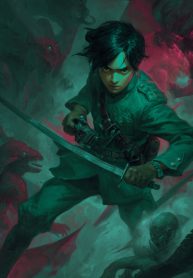
Corin had been in the Republic’s merchant quarter for four days under the name Aldren Sath, a mid-tier textile importer with an established business record and a Republic commercial license that had been active for six years.
The license was real. The business had conducted real transactions.
He was not a fanatic. He wanted this on the record, internally, in whatever part of him kept records: he was not one of the people burning things. The burning made him professionally angry in the specific way that sloppiness made professionals angry. It wasn’t moral outrage per Dr, just the clean frustration of watching someone create evidence with every step when the entire point of the operation was to create none.
The fanatics moved through Central like a fire that had been lit and given a direction. They were loud. They left material. They shouted things. They would be found in the Republic’s investigation within weeks, their identities reconstructed from a dozen different evidence streams, their connection to the Federation surfaced and documented and used to draft a formal diplomatic communication that would arrive on Asim’s desk in what Corin estimated as forty-five to sixty days.
His people would take longer to find. Much longer. The calculation had been made before they arrived: the fanatics were the noise that made the signal invisible. By the time the investigation worked through the noise and reached the layer underneath, the signal would be long gone and what remained would be ambiguous enough to be argued about in diplomatic sessions for months.
This was the plan. He was executing the plan.
His team of seven moved through Central in pairs, in the natural rhythms of commercial activity — meetings, deliveries, inspections of goods in transit. They visited six locations in four days. Each location contained information that a Federation military planning office would find valuable.
The information had no peaceful use. Corin knew this. He had known it before they arrived. He had filed it in the same place he filed the other things about this operation that didn’t fit the frame he’d been given, and the file was getting heavy, and he was not examining the file because examining the file was not his job.
His job was the work. The work was proceeding.
On the third day, in the narrow street behind the eastern market where two of his people were documenting the response unit rotation schedule from a rented window above a textile warehouse, the situation became complicated.
It was a civilian. Middle-aged woman, merchant class by her clothing, moving through the street with the specific purposeful distraction of someone running late for something. She walked into the gap between two bad things that were happening simultaneously and didn’t know it: a residual Crawler — one of the uncleared ones from the breach aftermath, Tier 1, disoriented and moving on vibration and a section of wall weakened by the breach’s structural damage was giving way from the north, and the woman was walking directly into the intersection of both.
The Crawler would reach her first.
Corin was at the window above. His two people in the street were positioned to observe, not to engage. Engaging meant exposure. Exposure meant the operation. The operation had a timeline and a second phase and twenty-three more people who were supposed to arrive in two weeks, and all of it depended on this phase being clean.
He had four seconds.
He gave a hand signal. His person on the street moved — not to intercept the woman, that would require explanation — but to the Crawler’s flank, neutralizing it without drawing attention. Four seconds. The Crawler died before the woman cleared the intersection. She walked past the spot where it had been without breaking stride.
Corin noted it in his log as an environmental complication that was resolved and had no operational impact.
He did not note the four seconds it had taken him to decide. The decision had not been complex. That was the part he wasn’t examining. He filed it with the other things and returned to the window and watched the response unit rotation for another forty minutes, and by the time they exfiltrated that evening the woman was on the other side of the city and the Crawler was nothing and the moment was exactly as operationally irrelevant as his log entry said it was.
He told himself this several times on the walk back to the textile warehouse. It remained true each time.
—–
The evidence package arrived on Valla Crane’s desk at 0800 on a Tuesday, flagged priority by the intelligence intake officer who had received it, assessed it, and escalated it with a notation that it had come through a confirmed-clean contact who had received it from a Valdris-adjacent source and passed it along in good faith.
She read it.
It was an intercepted Federation internal communication. Encrypted originally, decrypted through methods the intake notation described as consistent with the Republic’s established intercept capabilities. The content: a reference to an active intelligence operation in Central, asset deployment through commercial cover, specific mention of Ashmar Federation intelligence directorate authorization.
It confirmed Federation operatives in Central.
It pointed at exactly what the intelligence session had been building toward: Federation opportunism, the predictable response of a destabilized actor taking advantage of the breach chaos to gather intelligence on a weakened adversary.
She read it twice.
The Senate’s model received the document and produced the expected output. The intake assessment recommended escalation to the diplomatic response track. The draft communication to Ashmar, already in preparation since the intelligence session, acquired a new paragraph citing the intercepted communication as additional grounds for the Republic’s formal inquiry.
Valla approved the paragraph.
She felt the discomfort of something that had arrived too cleanly. Real intelligence was partial. Real intelligence required interpretation, argument, the friction of competing readings before a conclusion emerged. This document required no friction. It said what it said and what it said was exactly what the model was already pointing at.
She set it in the follow-up file because there were a lot more items in the itinerary and the draft communication had a response deadline and the machinery was moving and one person’s instinct about the texture of a document was not, in the operational context of a Senate intelligence session, a sufficient basis for stopping the machinery.
—-
Asim read Corin’s preliminary report on a Wednesday evening, alone in his office.
The operation was clean. The intelligence gathered was substantial. The exfiltration had been completed without incident. Corin’s assessment was professional and thorough and contained no ambiguities and no recommendations, which was how Corin wrote reports — he provided facts and left the direction to the people whose job direction was.
Asim set the report down.
He thought about Rondo.
Not Rondo the political situation. Not Rondo the justification. Rondo at eleven years old, in the eastern garden of the family compound, trying to explain to his father why the injured bird he’d brought inside deserved to stay inside permanently, making the argument with an earnest logic of a child who had decided something was right and was working backward to the justification. The argument had been terrible. Asim had let him make the whole thing before pointing out its flaws. The bird had stayed inside for three weeks.
He thought about this for approximately ninety seconds.
Then he picked up his pen.
The second phase authorization was three pages. It had been drafted before Corin’s report arrived — not presumptuously, just practically, the acknowledgment that if the first phase succeeded the second phase would follow and it was more efficient to have the authorization ready than to draft it in the aftermath. The draft had been sitting in his desk drawer for four days.
He signed it.
He did not hesitate before signing it. This was a choice he had made the moment he called his men the first time, and the subsequent choices had been the architecture of that first choice rather than independent decisions, and stopping now would not undo the architecture. It would only leave it incomplete, which was worse than completing it because incomplete structures fell on the people inside them.
He told himself this. It was true.
He sealed the authorization and sent it through the channel.
Outside his window, the Federation’s capital was proceeding through its evening with the ordinary rhythms of a city that did not know what was being decided inside its government buildings. Which was, Asim reflected, the condition of all cities always — the gap between what was decided inside the buildings and what was understood outside them, the permanent asymmetry that governance required and civics obscured.
He had governed by this asymmetry for
years.
He understood it completely.
He did not find it comforting tonight in the way he had found it comforting on previous nights, when the asymmetry had served the function of protecting his people from complexities they hadn’t needed to carry. Tonight it felt like a different kind of gap — not between the governors and the governed but between the man who had signed the document and the man who had let an injured bird stay inside for three weeks because his son had made a terrible argument for a right reason.
He left the office at nine. The authorization was already in transit.
The war was not declared. It was assembled, the way all large things were assembled — one authorization at a time, by people who were each looking at the piece in their hands and not the whole, because looking at the whole required a distance that none of them had and none of them could afford.
Somewhere in a room that appeared on no official architectural plan, the Merchant Prince was reading Rendell’s briefing report for the second time, making one additional margin note, and not laughing, because the thing about winning a phase was that winning a phase was simply arriving at the beginning of the next one, and the next one was harder, and the thing about hard phases was that they cost something, and the cost was never only paid by the people who deserved to pay it.
He made his note. Set the report aside. Picked up the next document.
The machinery moved. All of it, everywhere, simultaneously — the Republic’s careful diplomacy and Ashmar’s careful grief and Valdris’s careful architecture and Solhaven’s careful faith, all of it moving in the directions it had been built to move, toward the collision that none of the individual pieces could see because none of the individual pieces were looking at the whole board.
The whole board only looked like a whole board from one position.
The Merchant Prince was the only person currently occupying it.
He read. He noted. He planned.
Outside his window, the merchant city of Valdris glittered in the way that only gold could glitter. Gold for all it’s human failings did not require anyone’s wellbeing to continue shining.
Source: Webnovel.com, updated by NovelKeep
Chapters
- Chapter 242 - 242—Moving Crawlers
- Chapter 241 - 241—Adam's Morning
- Chapter 240 - 240—The Adept's Accounting
- Chapter 239 - 239— Crownhold’s Back
- Chapter 238 - 238—Differentials
- Chapter 237 - 237– The Path Between Nations II
- Chapter 236 - 236—The Path Between Nations
- Chapter 235 - 235— Dawn has Arrived
- Chapter 234 - 234—The Training Window
- Chapter 233 - 233— The Company of The Unprepared II
- Chapter 232 - 232—The Company of the Unprepared
- Chapter 231 - 231— The Architecture Of War II
- Chapter 230 - 230—The Arithmetic of War
- Chapter 229 - 229—The Architecture Of Inevitability II
- Chapter 228 - 228—The Architecture of Inevitability
- Chapter 227— Glimpse of Trauma
- Chapter 226—Strings
- Chapter 225— Receeding For Now
- Chapter 224—Nuclear
- Chapter 223— A Boring Discussion Between Monsters II
- Chapter 222— A Boring Discussion Between Monsters
- Chapter 221— The Black Author
- Chapter 220— The Picture Perfect ending?
- Chapter 219— Cascading
- Chapter 218—The Verdict
- Chapter 217— Race Against Time
- Chapter 216— Cracks in The Foundation
- Chapter 215— Powder Keg
- Chapter 214— Introspection
- Chapter 213— Celestine’ Timely Intervention
- Chapter 212— Feeling Lost
- Chapter 211— Blackmail
- Chapter 210—Seeking Help
- Chapter 209— Gathering Intelligence
- Chapter 208— Blame
- Chapter 207—First Mission
- Chapter 206— Pursuance of Individuality
- Chapter 205— Bane of Blood
- Chapter 204—Mara’s Breakthrough
- Chapter 203—Weird Merchant
- Chapter 202—Faction In The Works
- Chapter 201— A New Perspective
- Chapter 200— Johnmark VS Bright II
- Chapter 199— Johnmark VS Bright I
- Chapter 198— Silas’ Perspective
- Chapter 197—Everybody’s In On It
- Chapter 196—Testing The Spies
- Chapter 195— Baby Steps on Espionage
- Chapter 194— Soul Signatures
- Chapter 193— Thoughts on Structure
- Chapter 192— Back at It Again
- Chapter 191— End of the Narrator
- Chapter 190— Help Rendered In The Past
- Chapter 189— Culture Shocks
- Chapter 188— Crownspire
- Chapter 187— Happenings
- Chapter 186— Adam’s weird Side Project
- Chapter 185— Set In Motion
- Chapter 184— Acknowledging Power
- Chapter 183— The Compromised
- Chapter 182— Tether Drain
- Chapter 181— The Narrator
- Chapter 180— Merchant Calculations II
- Chapter 179—Merchant Calculation
- Chapter 178— Faculty Meeting
- Chapter 177—Political Currents
- Chapter 176— Forging Identity III
- Chapter 175— Forging Identity II
- Chapter 174: Forging Identity
- Chapter 173— External Pressure
- Chapter 172—Recovery and Recognition
- Chapter 171—Advancement and Consequences
- Chapter 170—Extraction and Advancement
- Chapter 169—Impulse and Execution
- Chapter 168— First Blood and Final Breath
- Chapter 167— Raw Combat and Harsh Lessons
- Chapter 166— Self evaluation
- Chapter 165— External Machinations and Internal Secrets
- Chapter 164—Self Interest
- Chapter 163— Bessia’s Stand
- Chapter 162: Trials of Fire
- Chapter 161— The portal
- Chapter 160— Bitter Preparation
- Chapter 159—The Art of Creation
- Chapter 158—Coalition in the South
- Chapter 157—Ominous preparations II
- Chapter 156—Ominous Preparations
- Chapter 155—The Widening Gap
- Chapter 154— Connections and Gaps
- Chapter 153—Opportunism and Cruelty
- Chapter 152— Power’s True Structure
- Chapter 151— Calculated Transformations II
- Chapter 150—Calculated Transformations
- Chapter 149— Discoveries and Dilemmas
- Chapter 148- Little Problem
- Chapter 147—Economics of Survival
- Chapter 146— Classes
- Chapter 145— First Lessons in Violence
- Chapter 144—Truth Beyond Propaganda
- Chapter 143— Victory and Defeat II
- Chapter 142—Victory and Defeat
- Chapter 141— Delusion
- Chapter 140: Combat Assessment - First Blood
- Chapter 139— First examination III
- Chapter 138—First examinations II
- Chapter 137— First Examinations
- Chapter 136— Arrival at Sparkshire
- Chapter 135— New -
- Chapter 134—Final Gathering
- Chapter 133—Cores and Farewells
- Chapter 132— Goodbyes
- Chapter 131—Counting the Cost
- Chapter 130—The Underwhelming Battle
- Chapter 129—Brutal Efficiency
- Chapter 128— Saved By The Engine
- Chapter 127— The Engine’s Arrival
- Chapter 126—Elsewhere
- Chapter 125—The Royal Beneath
- Chapter 124— Lethal Geometry IV
- Chapter 123— Lethal Geometry III
- Chapter 122—Lethal Geometry II
- Chapter 121— Lethal Geometry
- Chapter 120— The Silence and The Siege
- Chapter 119—Choices in the North
- Chapter 118— The Engine
- Chapter 117— Signals
- Chapter 116— Adept Distress
- Chapter 115—Noble Rhys
- Chapter 114—Everyone’s come for a checkup
- Chapter 113—Convergence of Power
- Chapter 112: Vacancy Creation
- Chapter 111: The Opportunist’s March
- Chapter 110— Three-way Casualties
- Chapter 109— Collision
- Chapter 108: Death of a Nobody
- Chapter 107—Third party
- Chapter 106— Clear Light’s Eve
- Chapter 105— Players Position
- Chapter 104— The Night Before
- Chapter 103— Ascension and Infestation
- Chapter 102—Delays and Decisions
- Chapter 101— Celebrations R18*
- Chapter 100: The Fifteen R18*
- Chapter 99—Schemes
- Chapter 98—- Thoughts and Reckonings
- Chapter 97—Adam’s Calculations
- Chapter 96—Stumbling Forward
- Chapter 95—Empathy
- Chapter 94—Cold Calculations
- Chapter 93—The Weight of Stones II
- Chapter 92—-The Weight of Stones
- Chapter 91—A bad Way to Grief R18*
- Chapter 90—Sad News
- Chapter 89—Conversations in Vester
- Chapter 88—Ellarine POV
- Chapter 87—Aftermath
- Chapter 86— End of Battle
- Chapter 85—First blood
- Chapter 84—Pencil Pushers
- Chapter 83—Eve Before Showdown
- Chapter 82—I spoke with Vaelith?
- Chapter 81—Weight of Power
- Chapter 80— Waves Recede
- Chapter 79—who’s really untop?
- Chapter 78—Taking risks
- Chapter 77—Shadows
- Chapter 76—Weapon secured
- Chapter 75—First Battle
- Chapter 74—Reflection
- Chapter 73 — Colony
- Chapter 72 – In The Caves
- Chapter 71 – Sunshine
- Chapter 70 — Squad Selection
- Chapter 69 — The Price Of Entry R18
- Chapter 68—Return Of The Prodigal Shadow
- Chapter 67 — The Eastern March
- Chapter 66 — The Cost of Making It
- Chapter 65 — Ash Between Footsteps
- Chapter 64 — Vester’s Shadowed Walls
- Chapter 63 — All Roads Led to vester
- Chapter 62 — Asset Retrieval
- Chapter 61 — The Monarch Of Bone
- Chapter 60 — The Long Shadow Of The Adept
- Chapter 59 — Breaking Points
- Chapter 58 – The Mixed Wave
- Chapter 57 — Hollow lines
- Chapter 56 — The Fire, The Stone, and the Shadow Between
- Chapter 55 – The Ones Who Remain
- Chapter 54 — “The Slow Goodbye”
- Chapter 53 — The High Command Convenes
- Chapter 52 — Atheon’s Fury
- Chapter 51 — The Folded Path of the Initiate
- Chapter 50 — The Weight of What Remains
- Chapter 49 — The Shadow That Moves
- Chapter 48 — The Quiet After the Storm
- Chapter 47 — What Remains in the Dark
- Chapter 46—Bright vs Larkin II
- Chapter 45 — Bright vs Larkin I
- Chapter 44 — The Others
- Chapter 43 — The People Behind the Walls
- Chapter 42 — The Fall of the Silo
- Chapter 41 — The Night Grim Hollow Trembled
- Chapter 40 — The Hidden Network
- Chapter 39 — Lockdown At Dawn
- Chapter 38 — Threads In The Dark
- Chapter 37 — Shadows In The Cracks
- Chapter 36 — First Drills
- Chapter 35 — The Fledgling Squad
- Chapter 34 — New Burden
- Chapter 33 — The Fracturing Within
- Chapter 32 — The Month of Breaking
- Chapter 31 — Sparks of Discipline
- Chapter 30 — The Quiet Between Battles
- Chapter 29 — Debrief and Division
- Chapter 28 — Echoes Beyond the Fog
- Chapter 27 — The Heart of the Shroud
- Chapter 26 — Fractures in the Fog
- Chapter 25 — The Echoing Hunger
- Chapter 24 — Hunger of Men, Hunger of Monsters
- Chapter 23—The Line We Cross
- Chapter 22 — Overrun
- Chapter 21 —The Heart That Watches
- Chapter 20 – Gathering Storm
- Chapter 19 – The Pulse Beneath
- Chapter 18: The Maw’s Heartbeat
- Chapter 17: The Sound in the Fog
- Chapter 16 – Poisoned Strength
- Chapter 15 – The Whispering Hunt
- Chapter 14 – Blood and Bone
- Chapter 13 – The Pulse of Instinct
- Chapter 12 – Nightfall in the Maw
- Chapter 11 — Shattered Company
- Chapter 10 — Splinters in the Dark
- Chapter 9 — The Crawlers’ Greeting
- Chapter 8 — The Next March
- Chapter 7 — What Stays Hidden
- Chapter 6 — Outpost Grimhollow
- Chapter 5 — The Blooded
- Chapter 4 — Blood in the Fog
- Chapter 3 – The March into Blindness
- Chapter 2 – The Ones Who Still Talk
- Chapter 1 – The Fodder Line